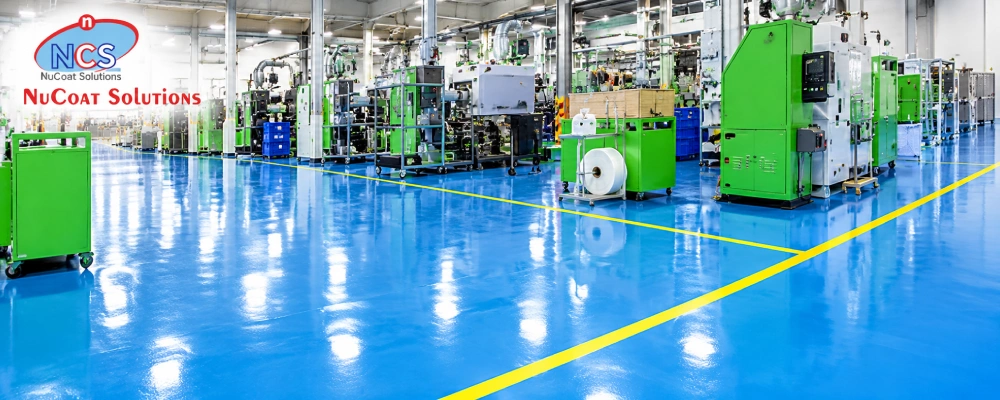
Why Is Your Factory Floor Cracking, Dusting, or Peeling, and Can Epoxy Flooring Solve These Problems in Hyderabad?
A factory floor does much more than support machinery, workers, and production equipment. It plays an important role in workplace safety, operational efficiency, cleanliness, and the overall performance of an industrial facility. Yet, flooring is often one of the most overlooked parts of a factory until visible problems begin to appear.
Cracks develop across concrete surfaces. Fine dust accumulates around machinery. Floor coatings start peeling, exposing the underlying concrete. These issues may initially seem minor, but ignoring them can lead to maintenance difficulties, safety concerns, and interruptions to daily operations.
For manufacturing facilities, warehouses, workshops, and commercial spaces in Hyderabad, choosing the right industrial flooring system is an important investment.
But why do factory floors deteriorate, and can epoxy flooring provide a long-lasting solution?
Let's explore the common causes of factory floor damage, how epoxy flooring works, its technical features, and why professional Epoxy Flooring Services in Hyderabad can help protect your facility.
Why Do Factory Floors Start Cracking, Dusting or Peeling?
Concrete is widely used for industrial flooring because of its strength, availability, and ability to support heavy loads. However, ordinary concrete is not completely resistant to wear and environmental stress.
Over time, several factors can affect its surface and structural performance.
1. Heavy Machinery and Continuous Load Pressure
Manufacturing units frequently operate heavy machines, forklifts, pallet trucks, storage racks, and industrial equipment. These activities place continuous pressure on the floor.
When the concrete slab is not adequately designed, reinforced, installed, or maintained for its intended loading conditions, cracks may develop.
Repeated movement of loaded vehicles can also contribute to surface deterioration, particularly around turning points, loading areas, and production zones.
2. Concrete Dusting and Surface Deterioration
Have you noticed a fine layer of grey dust collecting on your factory floor even after regular cleaning?
This may indicate concrete dusting.
Dusting occurs when the concrete surface becomes weak and starts releasing fine particles under foot traffic, machinery movement, or abrasion.
Common contributing factors include :
- Excessive water added during concrete mixing or finishing.
- Improper curing practices.
- Weak or poorly finished surface layers.
- Inadequate surface hardening.
- Continuous mechanical abrasion.
In manufacturing and packaging environments, concrete dust can become particularly problematic because it may affect housekeeping and cleanliness.
3. Peeling and Failure of Existing Floor Coatings
Some factories already have painted or coated concrete floors. However, not every coating is designed for industrial conditions.
When an unsuitable coating is applied without proper surface preparation, it may lose adhesion and start peeling.
Other contributing factors include moisture within the concrete, chemical exposure, poor application conditions, and incompatible coating materials.
Once the coating begins to fail, the exposed concrete becomes vulnerable to further wear.
4. Chemical Spills and Industrial Contamination
Factories may regularly handle oils, lubricants, cleaning agents, chemicals, and other industrial substances.
Depending on the chemical and the concrete's condition, repeated exposure can cause staining, surface degradation, or damage to an existing coating.
This is why selecting a flooring system based on the actual chemicals used in a facility is essential.
5. Temperature Changes and Moisture Problems
Temperature variations, moisture movement, and inadequate concrete joint detailing can contribute to flooring problems.
In industrial facilities around Hyderabad and other parts of Telangana, flooring requirements can differ depending on the building's age, ventilation, drainage, production process, and exposure conditions.
A proper inspection helps identify whether the problem is related to the surface coating, concrete slab, moisture, or structural movement.
What Are the Warning Signs of Factory Floor Damage?
Identifying flooring problems early can help prevent more extensive repairs.
Look for these common warning signs :
- Visible cracks: Hairline or wider cracks appearing across the concrete.
- Continuous dust formation: Fine concrete particles accumulating despite regular cleaning.
- Peeling coatings: Existing paint or floor coating separating from the surface.
- Uneven flooring: Depressions, damaged edges, or irregular surfaces.
- Oil and chemical stains: Persistent contamination affecting floor appearance and maintenance.
- Surface abrasion: Areas becoming rough due to machinery and vehicle movement.
- Loose or damaged concrete: Sections breaking away under repeated use.
Not every crack can be repaired simply by applying an epoxy coating. Active structural cracks, slab movement, and significant concrete deterioration require appropriate investigation and repair before installing a new flooring system.
Can Epoxy Flooring Solve Factory Floor Problems?
Yes. A properly selected and professionally installed epoxy flooring system can address many common factory floor surface problems.
A resin-based coating method called epoxy flooring is applied to a concrete substrate that has been properly prepared. Once cured, it forms a continuous, hard-wearing surface designed to improve the performance and maintainability of the floor.
Unlike ordinary floor paint, industrial epoxy systems can be specified in different thicknesses and formulations depending on the intended application.
How Does Epoxy Flooring Help?
1. Protects Against Surface Dusting
An appropriate epoxy coating seals the prepared concrete surface and helps prevent dust generated by surface abrasion.
This can improve housekeeping and make regular cleaning easier.
2. Improves Abrasion Resistance
Industrial epoxy systems are available for environments exposed to regular foot traffic, equipment movement, and mechanical wear.
The correct system can help protect concrete against everyday surface abrasion.
3. Provides Better Chemical Resistance
Depending on its formulation, epoxy flooring can resist exposure to selected oils, chemicals, and industrial substances.
However, chemical resistance is product-specific. The coating must be selected according to the chemicals, their concentration, temperature, and duration of contact.
4. Creates a Seamless, Easy-to-Clean Surface
Epoxy flooring can create a continuous surface with fewer dirt-trapping joints than many traditional flooring finishes.
This makes it suitable for production areas, warehouses, workshops, and other facilities where cleanliness matters.
5. Improves Workplace Appearance
A clean, professionally finished floor gives a factory a more organized appearance.
Different colours, line markings, and designated zones can also help improve visual organization within industrial spaces.
Key Features of Industrial Epoxy Flooring
Industrial epoxy flooring is not a single product. It includes different coating and flooring systems designed for specific operating conditions.
Important features include :
1. Strong Adhesion to Prepared Concrete
When the substrate is properly prepared and moisture conditions are suitable, epoxy systems can bond firmly to concrete.
2. Durable Surface Finish
Depending on the system thickness and formulation, epoxy flooring can provide resistance to abrasion, impact, and regular industrial traffic.
3. Chemical Resistance
Selected epoxy formulations are suitable for environments exposed to particular industrial chemicals, oils, and cleaning agents.
4. Customizable Colours and Finishes
Epoxy flooring can be installed in different colours and finishes to support facility organization and appearance.
5. Slip-Resistant Options
Anti-slip aggregates or textured finishes can be incorporated where additional traction is required.
The appropriate finish depends on the workplace, cleaning requirements, and expected exposure to water or oils.
6. Low-Dust Maintenance
A properly installed epoxy surface can reduce dust associated with exposed or deteriorating concrete.
Technical Specifications of Epoxy Flooring
How Thick Should an Industrial Epoxy Floor Be?
There is no single thickness suitable for every factory.
- Thin-film coatings: May be appropriate for light-duty areas with sound concrete and limited mechanical exposure.
- Self-levelling epoxy: Often selected where a smoother, more uniform finish is required.
- Heavy-duty epoxy systems: Considered for industrial environments requiring greater build and wear resistance.
- Specialized flooring systems: May be necessary for heavy impact, aggressive chemical exposure, or demanding hygiene requirements.
A professional flooring assessment helps determine which system is appropriate.
Major Benefits of Epoxy Flooring for Factories and Warehouses
Choosing the right industrial flooring system can offer several practical benefits.
- Improved cleanliness: A seamless coated surface is generally easier to clean than deteriorating or dusty concrete.
- Reduced surface dust: Suitable epoxy coatings help control dust generated from the prepared substrate.
- Better operational appearance: A uniform finish creates a more professional industrial environment.
- Resistance to everyday wear: Correctly specified systems can withstand the expected level of foot traffic and equipment movement.
- Customizable safety markings: Different colours and floor markings can help identify walkways, equipment zones, and operational areas.
- Simplified maintenance: Smooth, appropriately specified surfaces can reduce routine cleaning effort.
- Long-term surface protection: A suitable system can protect concrete from many forms of surface deterioration, reducing the need for frequent coating repairs.
However, epoxy flooring does not automatically correct structural concrete problems or eliminate the need for routine maintenance.
Industrial and Commercial Applications of Epoxy Flooring
Epoxy flooring can be used across different industries, provided the selected system meets the facility's operating requirements.
1. Manufacturing and Production Facilities
Manufacturing floors experience machinery movement, material handling, and regular operational activity.
Epoxy systems can help protect suitable concrete surfaces while providing an easier-to-maintain finish.
2. Warehouses and Logistics Centres
Warehouses require flooring that can accommodate regular pedestrian movement, pallet trucks, and forklift traffic.
Appropriately designed epoxy flooring can support these requirements.
3. Pharmaceutical and Healthcare Facilities
Certain pharmaceutical and healthcare environments require seamless, cleanable flooring.
Specialized epoxy systems may be suitable when their chemical resistance, hygiene requirements, and regulatory specifications are properly evaluated.
4. Food Processing Units
Food production environments require floors that can withstand frequent cleaning and exposure to selected cleaning chemicals.
The flooring system should be selected based on hygiene requirements, drainage conditions, temperature, and chemical exposure.
5. Automobile Workshops and Service Centres
Vehicle workshops often experience oil spills, grease, tyre movement, and mechanical abrasion.
A suitable epoxy flooring system can provide a durable, easier-to-clean working surface.
6. Commercial Buildings and Showrooms
Epoxy flooring is also used in commercial interiors, retail spaces, parking areas, and showrooms where appearance and maintainability are important.
How Is Epoxy Flooring Installed?
The quality of an epoxy floor depends heavily on preparation and installation. Applying resin directly over a damaged or contaminated surface is not a reliable solution.
A typical installation process includes the following stages.
Step 1: Site Inspection and Floor Assessment
The existing concrete is examined for cracks, dusting, peeling coatings, contamination, moisture, and uneven areas.
The intended industrial usage is also considered.
Step 2: Mechanical Surface Preparation
The concrete surface is prepared using suitable equipment, such as diamond grinders or shot-blasting machines.
This removes weak surface layers and helps create the appropriate surface profile for coating adhesion.
Step 3: Crack and Concrete Repairs
Suitable repair materials are used to address cracks, surface damage, and imperfections.
Active cracks, movement joints, and structural defects must be assessed separately. Simply filling them with resin may not prevent future movement.
Step 4: Primer Application
A compatible epoxy primer is applied according to the manufacturer's specifications.
This helps establish adhesion between the concrete substrate and the subsequent flooring layers.
Step 5: Epoxy Coating or Self-Levelling Application
The selected epoxy system is applied at the specified thickness using appropriate tools and application techniques.
Additional layers or aggregates may be incorporated depending on the design.
Step 6: Curing and Final Inspection
The coating is allowed to cure under the recommended environmental conditions.The completed floor is inspected before being released for normal operations.
Why Choose Nucoat for Epoxy Flooring Services in Hyderabad?
Selecting the right flooring contractor is just as important as selecting the coating material.
A high-quality epoxy product may still fail if the concrete is poorly prepared, the wrong system is selected, or the installation process is not followed correctly.
Nucoat provides an opportunity for businesses looking for professional flooring solutions in Hyderabad to assess their factory flooring requirements and identify an appropriate system.
Professional Flooring Assessment
Every industrial facility has different requirements. An assessment of the existing concrete, operational conditions, and intended usage helps determine the suitable flooring approach.
Customized Flooring Solutions
Different industries require different flooring characteristics. A manufacturing unit may prioritize abrasion resistance, while a pharmaceutical facility may place greater importance on cleanliness and chemical compatibility.
The flooring specification should reflect these differences.
Quality Materials and Application
The selection of suitable primers, epoxy materials, repair compounds, and finishing systems is essential for achieving a consistent result.
Attention to Surface Preparation
Surface preparation is a critical part of epoxy flooring installation. Proper grinding, cleaning, repairs, and substrate evaluation help establish the foundation for coating performance.
Support for Industrial and Commercial Requirements
From factory floors and warehouses to workshops and commercial facilities, the flooring system should be selected according to actual site conditions.
If you are searching for an Epoxy Flooring Contractor in Hyderabad, Nucoat can help you explore suitable flooring requirements for your facility.
How to Maintain Your Epoxy Factory Floor
Even a professionally installed industrial epoxy floor needs routine maintenance.
Follow these simple practices :
- Sweep or vacuum regularly to remove dust and loose particles.
- Clean spills promptly using suitable cleaning products.
- Avoid aggressive chemicals unless the flooring manufacturer confirms compatibility.
- Use appropriate protective pads beneath heavy equipment where necessary.
- Inspect high-traffic areas periodically for scratches, wear, and coating damage.
- Repair localized coating failures before they become more extensive.
- Follow the recommended cleaning and maintenance instructions for the selected system.
Regular inspection helps identify problems early and maintain the appearance and performance of the floor.
Frequently Asked Questions About Epoxy Flooring in Hyderabad
1. Can epoxy flooring stop factory floors from cracking?
Epoxy coatings can protect suitable concrete surfaces and repair systems can address certain non-structural cracks. However, epoxy alone cannot stop structural movement or correct an unstable concrete slab. The cause of cracking must be identified before installation.
2. Is epoxy flooring suitable for heavy machinery areas?
Yes, appropriately designed heavy-duty epoxy systems can be used in industrial areas exposed to machinery and equipment movement. The required system depends on static loads, dynamic loads, impact, and traffic conditions.
3. How long does industrial epoxy flooring last?
Its service life depends on coating thickness, material quality, surface preparation, installation, traffic intensity, chemical exposure, and maintenance. There is no universal lifespan applicable to every factory.
4. Can epoxy flooring be applied over an existing concrete floor?
Yes. Epoxy flooring is commonly applied over existing concrete after suitable inspection and preparation. Weak concrete, moisture issues, contamination, and damaged coatings must be addressed before installation.
5. How do I find a reliable epoxy flooring contractor in Hyderabad?
Look for a contractor who understands industrial flooring requirements, assesses the existing concrete, explains the proposed coating system, provides product specifications, and follows proper surface preparation and installation procedures.
Conclusion: Give Your Factory Floor the Protection It Needs
Cracking, dusting, and peeling are more than cosmetic problems. They can affect factory cleanliness, workplace safety, maintenance routines, and day-to-day operations.
Ignoring these warning signs may lead to more extensive concrete repairs and unnecessary maintenance expenses.
A properly selected epoxy flooring system can provide a durable, seamless, and easier-to-maintain surface for many industrial and commercial environments. The key is choosing the right material, preparing the concrete correctly, and following a professional installation process.
If your manufacturing unit, warehouse, or workshop is experiencing flooring problems, consider evaluating a suitable epoxy flooring solution before the damage becomes more extensive.
Looking for Reliable Epoxy Flooring Services in Hyderabad?
Contact Nucoat to discuss your factory flooring requirements and explore a suitable industrial epoxy flooring solution for your facility in Hyderabad and across Telangana.
Contact Us